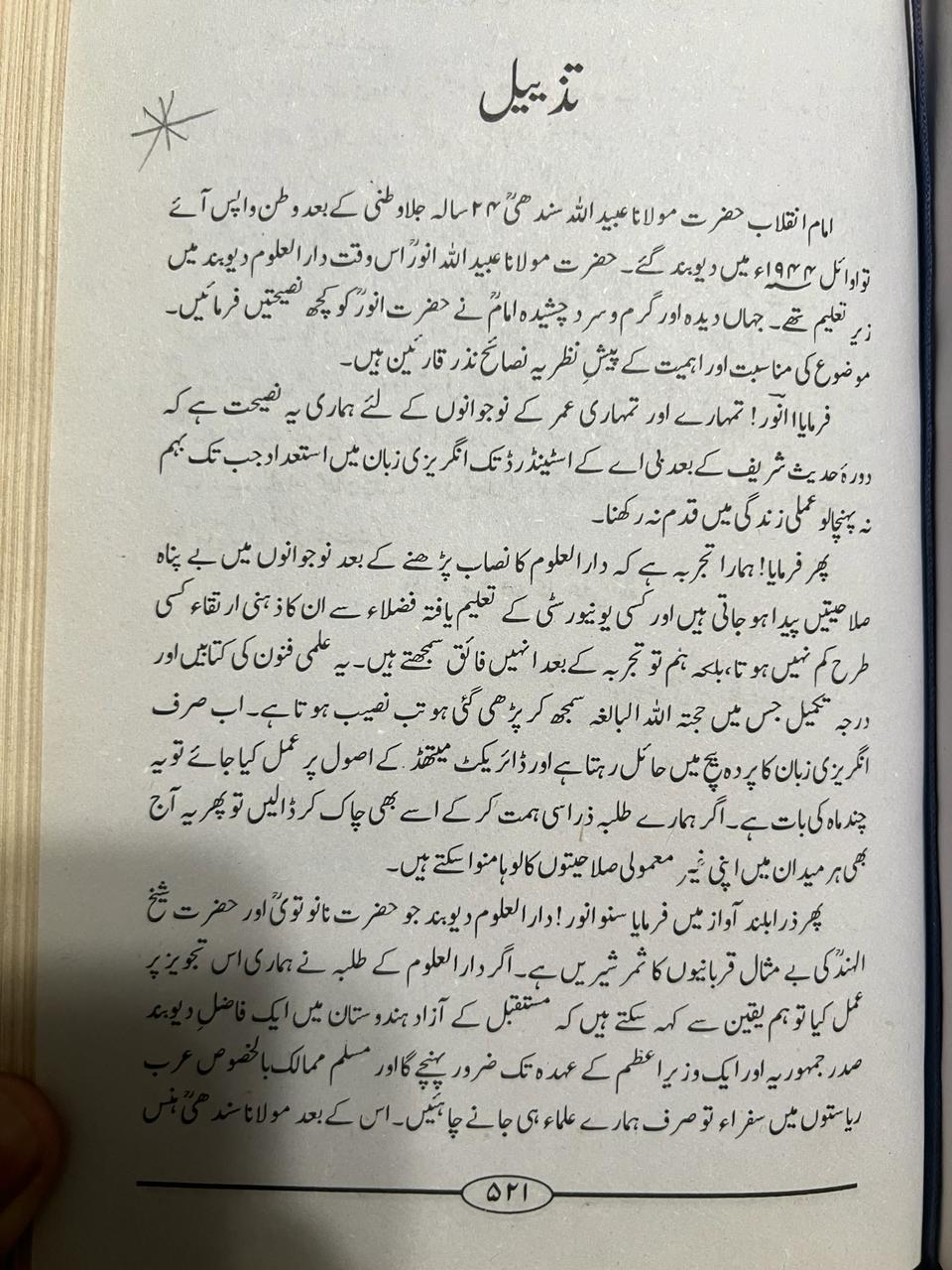
When the Imam of the Revolution, Mawlānā ʿUbayd Allāh Sindhī, may Allah have mercy on him, returned to his homeland after twenty-four years in exile, he visited Deoband in early 1942. At that time, Mawlānā ʿUbayd Allāh Anwar, may Allah have mercy on him, was a student at Dār al-ʿUlūm Deoband. The Imam, seasoned by long experience and acquainted with the trials of life, offered him several counsels. Given their relevance to the present subject, these counsels are presented here for the reader.
He said:
“Anwar, our advice to you and to young men of your age is this: after completing dawrah ḥadīth studies, do not step into practical life until you have acquired competence in the English language at least up to the level of a B.A. standard.”
He then added:
“Our experience is that after completing the curriculum of the Dār al-ʿUlūm, young graduates possess remarkable abilities. Their intellectual development is in no way inferior to that of university degree-holders. In fact, after observing them closely, we consider them superior. Mastery of the higher texts and the completion of one’s studies, especially after studying works like the Ḥujjat Allāh al-Bālighah with real understanding, produce this level of maturity. At that point, only the barrier of the English language remains. If one adopts the principles of the direct method, this barrier can be removed within a few months. Were our students to muster a little determination and tear through this veil, they could still prove their extraordinary capability in every field.”
Then, raising his voice slightly, he continued:
“Listen, Anwar. Dār al-ʿUlūm Deoband is the sweet fruit of the unparalleled sacrifices of Mawlānā Nānautawī and Shaykh al-Hind. If its students act upon this advice of mine, then I can say with certainty that, in the future independent India, a graduate of Deoband will rise to the office of President or Prime Minister. As for the Muslim world, especially the Arab states, the ambassadors representing them ought to be none other than our scholars.”
After this, Mawlānā Sindhī laughed and said,
“A thought is but a seed. Whether it becomes the fruit of a tree, the birth of a city, the founding of a university, or the spark of a movement, it first takes shape in the mind, then takes root in the earth, and eventually reaches upward to the heights of the sky.”
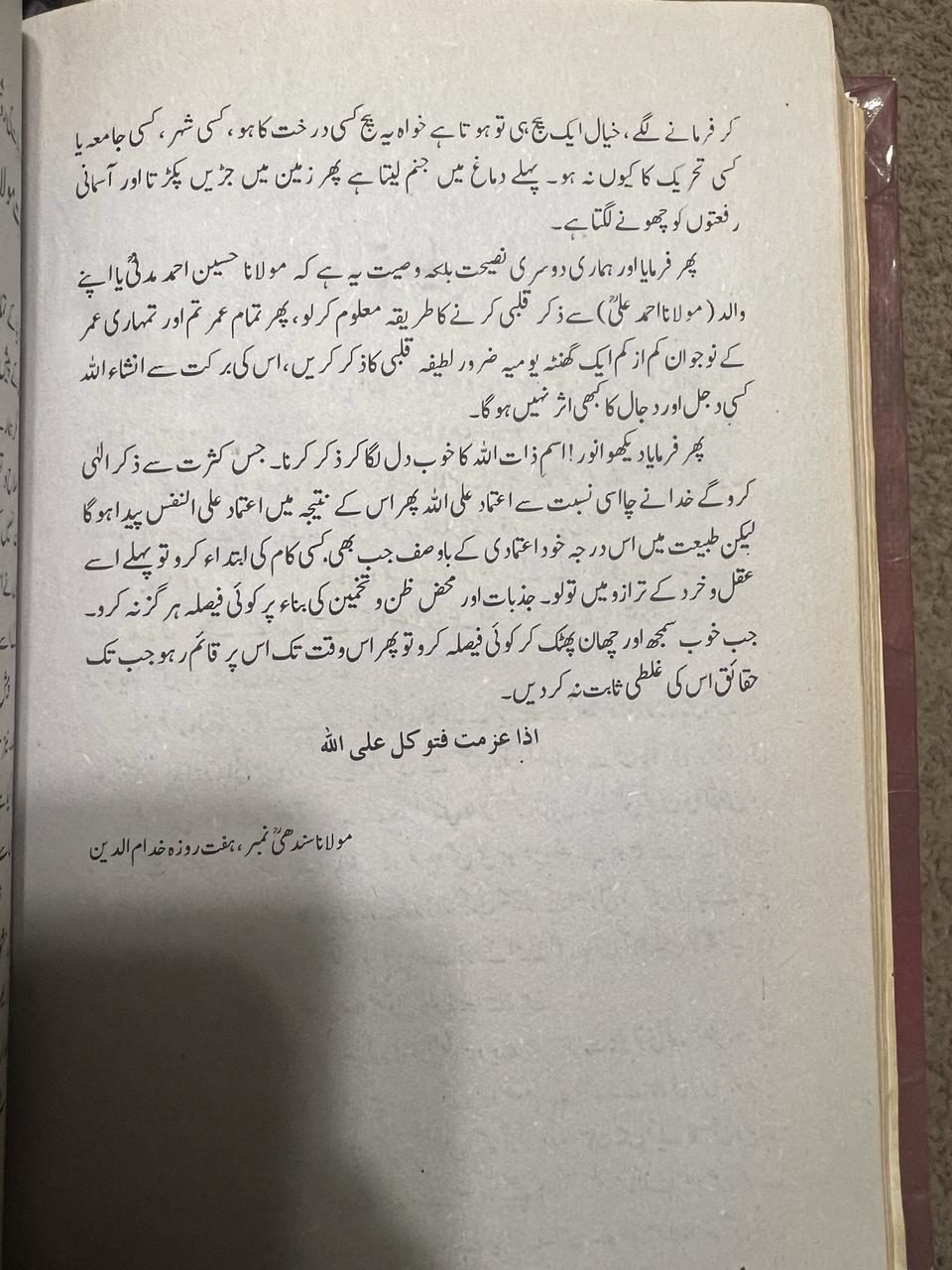
He further said:
“And our second counsel, rather our bequest, is this: learn the method of internal dhikr (dhikr qalbī) either from Mawlānā Ḥusayn Aḥmad Madanī or from your father, Mawlānā Aḥmad ʿAlī (Lahorī). Then, for the rest of your life, you and the young men of your age should devote at least one hour daily to the dhikr of the laṭifah qalbī (subtle faculty of the heart). By its blessing, God willing, no deception or dajjālī influence will ever overpower you.”
He continued:
“And look, Anwar, perform the dhikr of the Divine Name ‘Allāh’ with full presence of heart. The more abundant your remembrance of Allah (dhikr Allāh), the greater the reliance upon Allah (iʿtimād ʿala Allāh) that will settle within you. From this reliance upon Allah will spring a natural and balanced self-confidence (iʿtimād ʿala al-nafs). Yet even with such confidence, whenever you begin any task, first weigh it in the scale of reason. Never make decisions based on emotion or mere conjecture. Once you have examined a matter thoroughly and decided upon a course, remain firm upon it until facts themselves prove it wrong.”
And when you resolve, then place your trust in Allah.
From Mawlānā Sindhī Number, Weekly Khuddām al-Dīn.
The original Urdu:
امام انقلاب حضرت مولانا عبید اللہ سندھی ۲۴ سالہ جلاوطنی کے بعد وطن واپس آئے تو اوائل ۱۹۴۲ء میں دیوبند گئے۔ حضرت مولانا عبید اللہ انور اس وقت دارالعلوم دیوبند میں زیر تعلیم تھے۔ جہاں دیدہ اور گرم و سرد چشیدہ امام نے حضرت انور کو کچھ نصیحتیں فرمائیں۔ موضوع کی مناسبت اور اہمیت کے پیش نظر یہ نصائح نذر قارئین ہیں۔
فرمایا: انور ! تمہارے اور تمہاری عمر کے نوجوانوں کے لئے ہماری یہ نصیحت ہے کہ دوره حدیث شریف کے بعد بی اے کے اسٹینڈرڈ تک انگریزی زبان میں استعداد جب تک بہم نہ پہنچالو عملی زندگی میں قدم نہ رکھنا۔
پھر فرمایا : ہمارا تجربہ ہے کہ دارالعلوم کا نصاب پڑھنے کے بعد نوجوانوں میں بے پناہ صلاحیتیں پیدا ہو جاتی ہیں اور کسی یونیورسٹی کے تعلیم یافتہ فضلاء سے ان کا ذہنی ارتقاء کسی طرح کم نہیں ہوتا ، بلکہ ہم تو تجربہ کے بعد انہیں فائق سمجھتے ہیں۔ یہ علمی فنون کی کتابیں اور درجہ تکمیل جس میں حجتہ اللہ البالغہ سمجھ کر پڑھی گئی ہو تب نصیب ہوتا ہے۔ اب صرف انگریزی زبان کا پردہ بیچ میں حائل رہتا ہے اور ڈائریکٹ میتھڈ کے اصول پر عمل کیا جائے تو یہ چند ماہ کی بات ہے۔ اگر ہمارے طلبہ ذرا سی ہمت کر کے اسے بھی چاک کر ڈالیں تو پھر یہ آج بھی ہر میدان میں اپنی غیر معمولی صلاحیتوں کا لوہا منوا سکتے ہیں۔
پھر ذرا بلند آواز میں فرمایا سنو انور ! دار العلوم دیو بند جو حضرت نانوتوی اور حضرت شیخ الہند کی بے مثال قربانیوں کا ثمر شیریں ہے۔ اگر دارالعلوم کے طلبہ نے ہماری اس تجویز پر عمل کیا تو ہم یقین سے کہہ سکتے ہیں کہ مستقبل کے آزاد ہندوستان میں ایک فاضل دیوبند صدر جمہوریہ اور ایک وزیر اعظم کے عہدہ تک ضرور پہنچے گا اور مسلم ممالک بالخصوص عرب ریاستوں میں سفراء تو صرف ہمارے علماء ہی جانے چاہئیں۔ اس کے بعد مولانا سندھی ہنس کر فرمانے لگے ، خیال ایک بیچ ہی تو ہوتا ہے خواہ یہ سچ کسی درخت کا ہو ، کسی شہر ، کسی جامعہ یا کسی تحریک کا کیوں نہ ہو۔ پہلے دماغ میں جنم لیتا ہے پھر زمین میں جڑیں پکڑتا اور آسمانی اور رفعتوں کو چھونے لگتا ہے۔
پھر فرمایا اور ہماری دوسری نصیحت بلکہ وصیت یہ ہے کہ مولانا حسین احمد مدنی یا اپنے والد ( مولانا احمد علی) سے ذکر قلبی کرنے کا طریقہ معلوم کر لو ، پھر تمام عمر تم اور تمہاری عمر کے نوجوان کم از کم ایک گھنٹہ یومیہ ضرور لطیفہ قلبی کا ذکر کریں ، اس کی برکت سے انشاء اللہ کسی دجل اور دجال کا کبھی اثر نہیں ہو گا۔
پھر فرمایاد یکھو انور ! اسم ذات اللہ کا خوب دل لگا کر ذکر کرنا۔ جس کثرت سے ذکر الہی کرو گے خدا نے چا اسی نسبت سے اعتماد علی اللہ پھر اس کے نتیجہ میں اعتماد علی النفس پیدا ہو گا لیکن طبیعت میں اس درجہ خود اعتمادی کے باوصف جب بھی کسی کام کی ابتداء کرو ابتداء کرو تو پہلے اسے عقل و خرد کے ترازو میں تولو۔ جذبات اور محض ظن و تخمین کی بناء پر کوئی فیصلہ ہر گز نہ کرو۔ جب خوب سمجھ اور چھان پھٹک کر کوئی فیصلہ کرو تو پھر اس وقت تک اس پر قائم رہو جب تک حقائق اس کی غلطی ثابت نہ کر دیں۔
اذا عزمت فتوكل على الله
مولانا سندھی نمبر ، ہفت روزہ خدام الدین
 Ṭaḥāwī